Cowboy with a Lasso: A Designer’s Review
When I evaluate a new embroidery file, I am rarely looking for just a pretty picture. I am looking for viability. Does this design hold up when it hits the hoop? Will it translate well to a finished product that a customer will actually wear or use, or does it look like a digital concept that fell apart in production? Today, I am putting Cowboy with a Lasso through its paces. This piece falls squarely into the Hobbies and Crafts categories, but for those of us running small businesses or managing custom client orders, the distinction between a "cute clipart" and a "sellable asset" is often found in the details.
First Impressions and Visual Personality
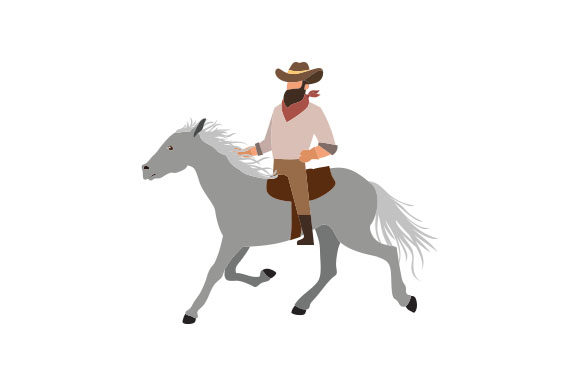
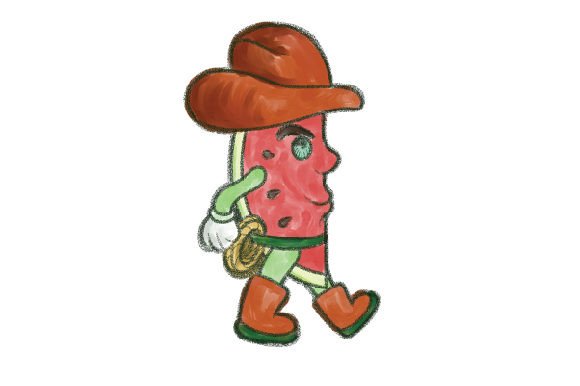
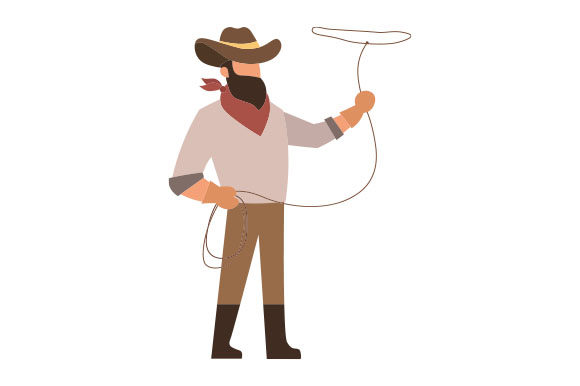
The moment you load Cowboy with a Lasso into your digitizing software, the composition commands attention. It is not subtle, and frankly, that is its strength. The subject matter—a cowboy wielding a lasso—evokes a specific mood: rugged, adventurous, and timeless. For a designer, this visual personality is gold because it carries immediate recognition. You do not need to explain what the item represents; the iconography speaks for itself.
From a layout perspective, the design feels balanced. The arc of the lasso provides natural negative space that guides the eye, while the figure of the cowboy anchors the center. In my experience, designs that rely heavily on diagonal lines or curves can sometimes suffer from distortion if the underlying stitch structure is weak. However, preliminary checks suggest that Cowboy with a Lasso has enough structural integrity to handle the tension of typical embroidery threads. It feels less like a flat illustration and more like a character ready to be brought to life on fabric.
Real-World Application: The Custom Tote Bag Scenario
To truly test a design, you have to imagine it on a real product. Let’s talk about a common scenario for many Etsy sellers and craft business owners: creating a custom embroidered tote bag for a boutique gift shop. Imagine a heavy canvas tote, perhaps in a natural beige or a deep navy blue. Placing Cowboy with a Lasso prominently on the front panel immediately elevates the perceived value of the item.
This is not just a novelty item; it becomes a statement piece. When a customer picks up a tote bag featuring this design, they are buying into a lifestyle—the outdoors, the rodeo, or simply a love for Americana aesthetics. The design works exceptionally well as a tote bag design because the scale allows the details of the lasso and the cowboy’s posture to breathe. If you were to shrink this down too much, you would lose the charm, but at a standard chest or pocket placement size, it strikes the perfect balance between bold and wearable.
I also see this design thriving on sweatshirt embroidery. A heavyweight cotton blend hoodie with Cowley with a Lasso stitched in contrasting thread colors creates an instant favorite for holiday gifts or birthday presents. The texture of the sweatshirt fabric complements the sturdy nature of the design, making the final product feel substantial and high-quality.
Where to Exercise Caution
No design is universal, and Cowboy with a Lasso is no exception. As an experienced reviewer, I must highlight where this file might struggle. First, consider the hoop size. If you attempt to fit this entire composition into a very small hoop, such as a 4x4 inch frame, you risk losing critical definition. The smaller details in the lasso loop or the cowboy’s facial features may become muddy or indistinguishable. Always check the bounding box before committing to a small garment like a baby onesie or a child’s cap.
Fabric choice is equally critical. While this design looks great on stable fabrics like cotton twill or denim, it requires careful handling on stretchy materials. If you plan to embroider this onto a polyester performance shirt or a thin knit, you will need a robust stabilizer solution to prevent puckering. Furthermore, avoid placing this design on highly textured fabrics like chunky wools or bouclé unless you are prepared for the thread to sink into the weave, obscuring the finer stitches.
Another area of concern is dark fabric. If you choose a black or dark navy background, you must ensure your thread colors offer sufficient contrast. A light-colored cowboy silhouette on a dark background can work beautifully, but if the design relies on subtle shading or low-contrast outlines, it may disappear. Test your color combinations rigorously.
Technical Execution and Stitch Quality
When analyzing the stitch types within Cowboy with a Lasso, we typically see a mix of techniques that define professional-grade digitizing. The outline of the cowboy likely utilizes a dense satin stitch to provide a clean, sharp edge. This is crucial for maintaining the shape of the hat brim and the lasso loop. Inside the figure, you will likely find fill stitch patterns to add volume and texture without excessive weight. These fill areas should lay flat and cover the base fabric evenly.
For finer details, such as the reins or facial features, the design probably employs running stitch. This technique is excellent for adding definition without bulk. However, designers must pay close attention to stitch density. If the density is too high, the fabric may pucker; if it is too low, the underlying material may show through, giving the finished product a cheap appearance. Before running a full production batch, always stitch out a sample on scrap fabric to verify that the stitch density is appropriate for your chosen thread type and fabric weight.
Strategic Advice for Sellers and Makers
If you are planning to use Cowboy with a Lasso for commercial purposes, there are several practical steps you should take. First, inspect the files carefully. The product description notes availability in SVG, Transparent PNG, EPS, and DXF formats. This versatility is a major advantage. You can use the vector files (SVG/EPS) for print-on-demand mockups or scaling, while the embroidery-specific files (DXF) prepare the design for your machine.
Before listing any items, create printable mockups to visualize the design in context. Place the cowboy graphic on images of aprons, pillow covers, and kitchen towels to see how it resonates with different audiences. This helps you target the right niche, whether it is home decor enthusiasts or outdoor apparel fans. Additionally, confirm the licensing terms explicitly. Just because you purchased the file does not automatically grant you the right to sell unlimited physical goods or redistribute the digital assets. Protect your small shop product by understanding these boundaries.
Finally, remember that presentation matters. When showcasing your handmade products, highlight the craftsmanship. Use close-up shots that reveal the quality of the satin edges and the neatness of the backside stitching. This transparency builds customer trust and reinforces the professional image of your brand. Cowboy with a Lasso is a strong contender for anyone looking to add a touch of western flair to their collection, provided it is executed with care and attention to detail.